Review: Embroidery Texture Notion Covers for Merch
As an embroidery designer who has spent years translating digital concepts into tangible thread work, I approach every new asset with a mix of creative excitement and technical skepticism. When Embroidery Texture Notion Covers landed on my desk, my first instinct was to look past the aesthetic promise and ask: does this hold up in production? For small business owners, Etsy sellers, and apparel decorators, the difference between a pretty graphic and a profitable product often lies in how well a design translates from screen to fabric. This review evaluates Embroidery Texture Notion Covers not just as a decorative element, but as a viable component for branded merchandise, patches, uniforms, and high-value handmade products.
First Impressions: Aesthetic and Brand Personality
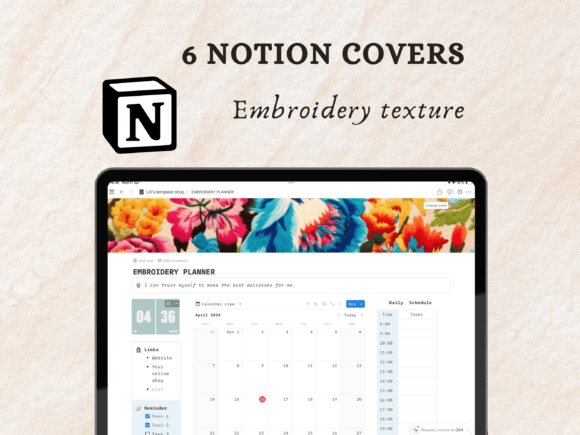
The title Embroidery Texture Notion Covers suggests a focus on tactile quality and organizational charm. Based on the description, these are designed to enhance the visual appeal of digital spaces like Notion hubs and planners, but their true potential lies in their physical application. The texture implied by the name evokes a sense of handmade warmth, rustic elegance, and approachable professionalism. It feels less like a rigid corporate logo and more like a badge of honor for a creative studio or boutique.
For brands aiming to project a premium yet playful image, this design hits the right notes. Whether you run a local café, a florist shop, a pet brand, or a handmade craft business, the texture adds depth that flat graphics cannot achieve. It signals attention to detail—a crucial factor in building customer trust and recognition. When a customer sees a textured, well-executed patch on a tote bag or apron, they immediately associate that quality with the craftsmanship of your core products.
Real-World Business Applications
The versatility of Embroidery Texture Notion Covers makes it an excellent candidate for various small business merch items. Here is how it performs in real-world scenarios:
- Embroidered Patches: This design excels as a standalone patch. The textural elements provide enough visual interest to stand out without requiring complex lettering. Attach these to denim jackets, beanies, or backpacks for a trendy, custom apparel look that appeals to younger demographics.
- Staff Uniforms and Aprons: For bakeries, cafes, or retail boutiques, adding a subtle texture to chest logos or sleeve cuffs elevates the uniform from generic to branded. It creates a cohesive brand identity while maintaining a friendly, artisanal vibe.
- Caps and Headwear: The compact nature of most "notion" designs fits perfectly on the front panel of structured caps. The texture helps break up large areas of solid color, making the hat look more dynamic and less mass-produced.
- Tote Bags and Work Shirts: As a tote bag design accent, it works beautifully near handles or pockets. On work shirts, it serves as a professional mark that doesn’t overwhelm the garment’s utility.
- Product Packaging Accents: Beyond clothing, consider using this as a label sewn onto gift boxes, candle jars, or soap wrappers. It transforms simple packaging into a handmade product experience, increasing perceived value and encouraging social media shares.
Technical Considerations and Design Constraints
While the aesthetic appeal is strong, an experienced designer knows that not every graphic survives the transition to the hoop. There are specific areas where Embroidery Texture Notion Covers requires careful handling:
- Small Patch Sizes: If you plan to scale this down significantly (e.g., under 2 inches), the texture may become muddy. Fine details can get lost in the stitching process, resulting in a blob rather than a defined shape. Always test at actual size before committing to bulk orders.
- Cap Fronts and Curved Surfaces: Embroidering on curved surfaces like caps introduces distortion. Ensure the design’s outline is robust enough to withstand the tension of the cap’s curve without pucker marks.
- High Stitch Density: Textured designs often rely on dense fill stitches. While this adds richness, it can make fabric stiff. Be mindful of the base material; delicate fabrics may warp under heavy stitch density.
- Dark Uniforms and Fabric Texture: Contrast is key. On dark backgrounds, ensure the thread colors chosen for the texture are light enough to pop. Conversely, on highly textured fabrics like burlap or thick canvas, the embroidery might sink in, losing its definition.
- Frequent Washing: For items like aprons or work shirts that undergo frequent laundering, the durability of the texture is paramount. Loose threads or intricate outlines may fray over time if not properly backed with stabilizer.
Impact on Brand Identity and Customer Engagement
In the crowded marketplace of Etsy branding and independent shops, visual consistency is everything. Using Embroidery Texture Notion Covers across multiple touchpoints—digital mockups, physical tags, and apparel—creates a unified narrative. It tells the customer that you care about the feel of your brand, not just the look.
This design choice enhances professionalism by moving away from cheap-looking printed decals toward traditional embroidery. It suggests longevity and quality. Customers are often willing to pay a premium for goods that feature genuine commercial embroidery, as it implies a higher level of craftsmanship. Furthermore, the unique texture differentiates your products from competitors who rely solely on screen printing, boosting buyer engagement through tactile uniqueness.
Practical Designer Notes for Production
Before integrating Embroidery Texture Notion Covers into your production line, follow these essential steps to ensure success:
- Test in Black and White: Strip away the color to see if the design’s structure holds up. If it looks weak in monochrome, it will likely struggle in color.
- Check Thread Color Contrast: Select thread colors that complement your brand palette while ensuring sufficient contrast against the target fabric.
- Inspect Spacing and Hoop Size: Verify that the hoop size accommodates the design comfortably. Tight spacing can lead to needle strikes or thread breaks.
- Use Proper Stabilizer: Choose a stabilizer (cut-away or tear-away) appropriate for the fabric weight to prevent puckering and maintain the integrity of the texture.
- Create a Printable Mockup: Use the included printable mockup to visualize the design on various products. This helps in client approval processes and marketing materials.
- Confirm Commercial Licensing: Since this is categorized under Graphic Templates and Graphics, double-check the license terms. Ensure you have the right to use it for commercial embroidery projects, especially if selling finished goods.
- Compare Beside Other Assets: Place the design next to your existing logo and other design assets to ensure visual harmony. Does it feel like part of the family, or does it clash?
In conclusion, Embroidery Texture Notion Covers offers a compelling blend of aesthetic charm and functional versatility. For small business owners looking to elevate their embroidery file library, this asset provides a sophisticated way to add texture and depth to finished products. By paying attention to technical details like stitch density and fabric compatibility, you can transform this digital template into a powerful tool for brand building and customer loyalty. It is more than just a cover; it is a statement of quality in every stitch.